Shrinking Families, Shrinking Nation: Save Kutumb, Save India
The argument for preserving India’s wider kinship web is not nostalgia. It is hard logic. — Prof. Deepak Sharma
For decades, India’s planners treated population as a liability. “Hum Do Hamare Do” posters went up across the country. Economists called children “dependents.” Policy incentivized the one-or-two-child norm. The result is now starkly visible: India’s Total Fertility Rate (TFR) fell from 5.9 in 1951 to 1.9 in 2024 — below the replacement level of 2.1 for the first time in the nation’s history .
But something deeper was also lost in this demographic transition. The Indian concept of parivar was never the biological nuclear unit that Western sociology took for granted. It was, in Pandit Deendayal Upadhyaya’s words, “the primary and widest foundation of society” — an institution of shared duties, collective security, and civilizational continuity . As Upadhyaya reminded us: “Kutumb bachega, tabhi sanskriti bachegi; sanskriti bachegi, tabhi rashtra bachega” — If the family survives, culture survives; if culture survives, the nation survives.
Western sociologists, from Talcott Parsons to Pitirim Sorokin, largely analyzed the nuclear family: two parents, dependent children, and neolocal residence. The metrics were income, consumption, and fertility rates. Upadhyaya’s Integral Humanism rejected that narrow frame entirely. He saw the Indian kutumb as a sanskara-kendra — a center of values, not just biology . His philosophy advocated the simultaneous and integrated development of body, mind, intellect, and soul — a synthesis of the material and the spiritual, the individual and the collective.
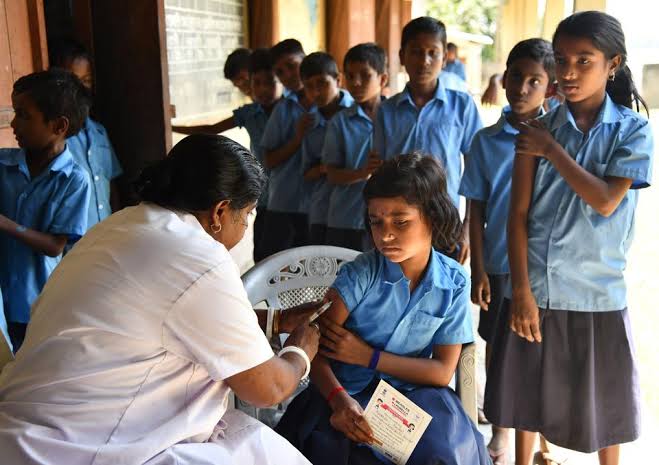
Post-1947, Indian economics was profoundly shaped by Malthusian fear. The First Five-Year Plan (1951-56) called population growth “the greatest obstacle to development.” By 1952, India had the world’s first state-sponsored family planning program. The Emergency years (1975-77) took this to coercion, with 8.3 million sterilizations performed in a single year. The message to parents was moral, not just economic: having more than two children was irresponsible. Textbooks, television advertisements, and ASHA worker visits all reinforced the “small family, happy family” norm. Subsidies, school admissions, and government jobs often favored two-child families. It worked demographically — TFR crashed from 5.9 to 1.9 in just seven decades .
But the intellectual premise was deeply flawed. It assumed children were only “mouths to feed,” not “hands to build.” It ignored what Upadhyaya flagged decades ago: a society that sees its next generation as a burden will soon find itself without strength. The one-child norm has produced a new Indian childhood — and a new Indian problem. Child psychologists now report three distinct patterns emerging across urban India.
First, the “pampered kid syndrome” with no siblings to compete or cooperate with, the lone child often grows up as the sole focus of parental ambition and anxiety. Every fever becomes a crisis. Every exam becomes a family referendum. The result: low frustration tolerance and high performance pressure.
Second, young children lack social skills deficit today. Cousins and siblings were traditionally India’s first conflict-resolution workshop. You learned to negotiate, lose gracefully, share resources, and stand up for yourself. Lone children enter school without that crucial training. Teachers report more difficulty in group tasks, more tantrums when denied, and weaker peer bonding than children from larger families.
Third, mental health burden is on the rise. Studies increasingly link small-family structures to higher adolescent anxiety. With no sibling confidant, the child has only adults — who are either authority figures or projectors of expectation. Children from joint families had bua, chacha, dada, dadi as emotional buffers. The nuclear lone child often has none. Small families have not produced healthier children. They have produced lonelier children.
Sociologists have long debated the nature of the Indian joint family. Unlike the Western nuclear model, the joint family is based on relations among adult males rather than conjugal bonds between spouses. Arranged marriages lower the likelihood that an intense marriage bond might break up the unit into nuclear households. Segregation of the sexes before and after marriage further lessens the chance of such a breakup.
The joint family is characterized by co-partnership — persons who have a right to the products of the family property. This includes brothers in any generation, together with their sons in the next generation. The property is co-owned and cannot ordinarily be divided. Even if Hindu brothers live separately, they consider themselves a joint family if they continue to respect their common obligations, which include a joint budget, authority in the hands of the oldest male, and joint maintenance of property.
The argument for preserving India’s wider kinship web is not nostalgia. It is hard logic. Demographic balance demands it — with TFR at 1.9, each generation is approximately 25% smaller than the last. Child development demands it. Siblings and cousins are nature’s socialization lab. Children learn delayed gratification, empathy, and leadership by navigating relationships with multiple family members. Elder care and risk pooling demand it — in a joint-family system, the burden of ageing, illness, or unemployment is distributed across multiple shoulders rather than falling on a single individual.
Cultural continuity demands it. Language, festivals, recipes, and folk memory survive through children raised in extended families. As Upadhyaya warned, “A nation is not preserved by armies, but by families that remember.”