
India—which has been playing a pivotal role in the ongoing digital revolution—could give significant impetus to its efforts by imposing tariffs on e-transmissions. — Dr. Ashwani Mahajan
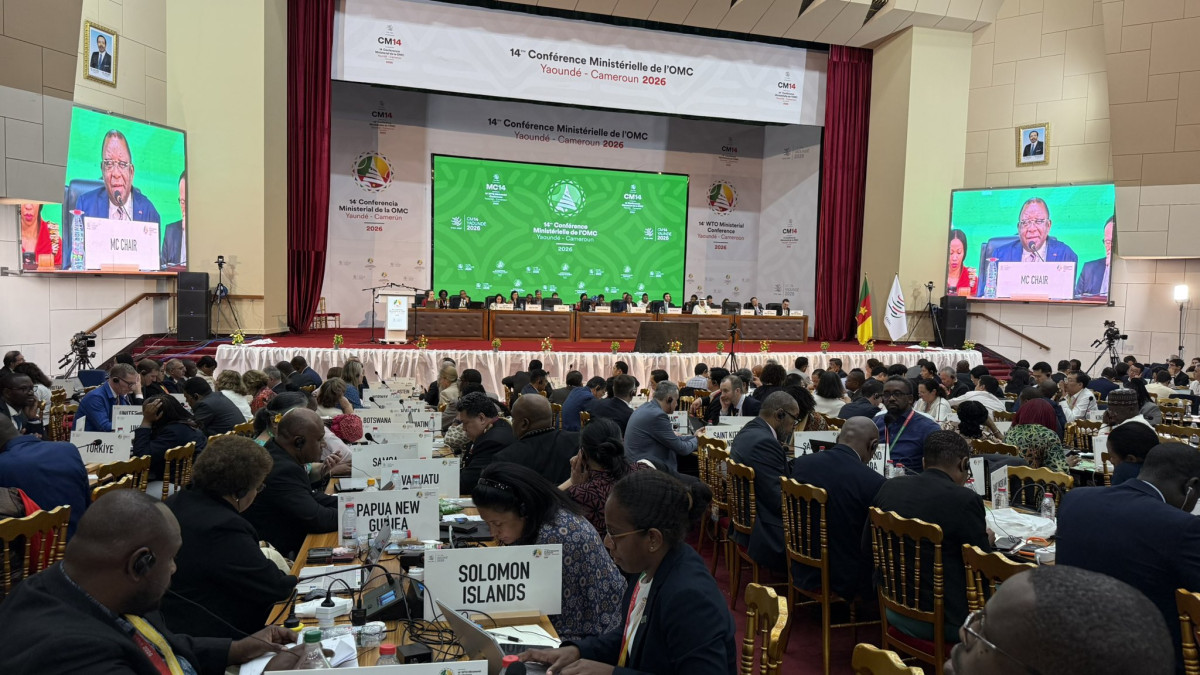
As the 14th Ministerial Conference of World Trade Organisation concluded on March 29, the member countries realised (even surprised) that the moratorium on e-transmission tariff has suddenly lapsed, which had continued for nearly 28 years since 1998. No country had expected this outcome. Issue of this moratorium has been one of the most contentious one, where the question was whether or not the moratorium should stay; and if it stays, for how long. US wanted this moratorium to stay for ever (permanently) and position of developing countries including India, was that it should not be extended at all, and if extended, it should not be for more than 2 years, and not more that 4 years in any case.
As a student of trade economics, I had always wondered, logically, why and how this moratorium has been continuing, where developing countries, who are opposed to this, were not supposed to do anything big to end this, and just had to not agree on this issue and moratorium would have lapsed years ago. Since 1998, every successive ministerial conference (MC) of WTO kept on extending till next MC. MC13 also resolved as follows:
“We agree to maintain the current practice of not imposing customs duties on electronic transmissions until the 31st of March 2026 or the date of the next Session of the Ministerial Conference, whichever is earlier.”
Drama Explained
The “drama” around the lapse of the WTO e-commerce moratorium (on customs duties on electronic transmissions) is really about process, power politics, and timing at the World Trade Organisation.
Experience in the yesteryears was little different from what happened this time in MC14 of WTO. For years, the moratorium had been routinely extended at every Ministerial Conference since 1998. Most developed countries—especially the United States, European Union and Japan, assumed it would again be extended smoothly. But they didn’t realise that scenario has changed in the last few years. It is important to understand that in recent years, countries like India, Brazil and South Africa, had began opposing automatic extensions. Their opposition was not without reasons. And the stand of developing countries shifted from passive acceptance to active resistance.
It was actually a procedural twist. At the WTO, decisions like this require consensus. That means, that every one country objecting to a decision can actually block extension; and it required no formal vote and no majority override. Therefore, when Brazil and India refused to agree, the extension could not be adopted. That we can say that moratorium did not end by any active decision, rather it lapsed by default, as there was lack of consensus for renewal.
In fact, the developed countries, misread the resolve of India, Brazil, and other countries. They expected last-minute compromise, as was happening in the past conferences. Since the negotiations dragged, till the end and no agreement emerged till the deadline, and moratorium lapsed.
Another point, which developed countries could not realise was that there was a political undercurrent. On the one hand, there were digital exporters (developed countries), who wanted permanent ban on tariffs; on and on the other hand there were large number of developing countries, large importers of digital products, who were at disadvantage, and wanted to get rid of the moratorium.
Forces working for restoring Moratorium
As soon as the moratorium lapsed, people at the top in WTO, have started wishing to restore the same. Director General WTO Ngozi Okonjo Iweala said that the e-commerce moratorium had expired, meaning country could now apply duties on electronic goods sold at digital downloads and streaming; but she said the WTO hoped to be able to restore the moratorium and that Brazil and the US were trying to reach agreement on it. “They need more time and be did not have the time here”, she said.
It is notable that the second most important decision making body in WTO in General Council (GC), which is expected in May, 2026, in Geneva. Developed countries may try to revive this moratorium in GC, which lapsed suddenly, against their wishes at GC in Geneva. But it is now time for developing countries, who have an upper hard after the sudden lapse, to tighten their belts and sharpen their arguments, which were earlier not being heard enough. Though, counter allegations are being made by US and Brazil, what has come out is entirely different outcome.
Why Lapse of E Transmission Tariff Moratorium is a Blessing
It is true that the moratorium on tariffs on digital products has lapsed with the conclusion of the 14th Ministerial Conference (MC14) of the World Trade Organization (WTO), because the MC14 failed to reach a decision within the allotted time. Lapse of E Transmission Moratorium, due to lack of consensus, is not the only outcome, in fact MC14 failed to reach a consensus among member nations on most of the critical issues at hand, including Public stockholding, Special Safeguard Mechanism (SSM), fisheries subsidies, dispute settlement crisis, domestic support, special and differential treatment ( S&DT), investment facilitation, industrial subsidies, and unresolved Doha Development Round agenda. Though, there have been several Ministerial Conferences, where a consensus could not be reached, this conference in Cameroon will be remembered, not only for its failure to reach decisions, but also for the reason that widening rifts within the WTO, got fully exposed. Although, the lapse of the e-transmission tariff moratorium is being viewed as a technical outcome, it also underscores the growing fragility within the WTO framework.
There is a growing perception that the WTO is paralysed. It’s not due to any lapse that agreement couldn’t be reached; it appears that the member nations no longer believe that the WTO serves the collective well-being of all. On the one hand, developed nations have been striving to advance their own interests in areas such as digital trade, intellectual property rights, agricultural and industrial subsidies, and supply chains resilience; on the other hand, developing nations are struggling to correct long-standing asymmetries within the WTO and to safeguard their own policy space. Given the fact that developed nations are unwilling to relinquish their advantages under any circumstances, reaching a consensus with developing nations is becoming increasingly difficult—more so now than ever before. It is no secret that, in the past, developed nations often succeeded in pushing through decisions—leveraging their economic and strategic might—that ultimately worked to the detriment of developing nations. However, the geopolitical landscape is shifting today; emerging nations such as India, Brazil, and South Africa are no longer willing to accept the hegemony of wealthy nations. Developed countries must recognize that if they don’t acknowledge the sentiments and aspirations of developing nations, reaching a ‘consensus’—the foundational principle upon which the World Trade Organization (WTO) operates—will prove to be an arduous task.
It is Imperative for India to Introduce Tariffs on E-Transmissions
Now that the moratorium on e-transmissions at the WTO is drawing to a close, the Government of India must, without delay, begin imposing tariffs on these digital products. It is noteworthy that, according to 2017 estimates, India was incurring a loss of $500 million—and the global economy a loss of $10 billion—due to the moratorium on e-transmission tariffs. Since then, however, there has been a massive surge in the trade of digital products; according to a rough estimate, imposing tariffs on these items could generate revenue for India ranging from $3 billion to $5 billion—equivalent to approximately Rs. 28,500 crore to Rs. 47,750 crore. Significantly, this very argument was prominently advanced, by India at WTO, regarding the lifting of the moratorium on e-transmission tariffs. Moreover, India—which has been playing a pivotal role in the ongoing digital revolution—could give significant impetus to its efforts by imposing tariffs on e-transmissions. Furthermore, developed nations could potentially exploit the absence of tariffs on e-transmissions to convert export of various physical goods into “e-transmissions”—under the guise of 3D printing—thereby inflicting substantial economic losses upon the developing countries including India.