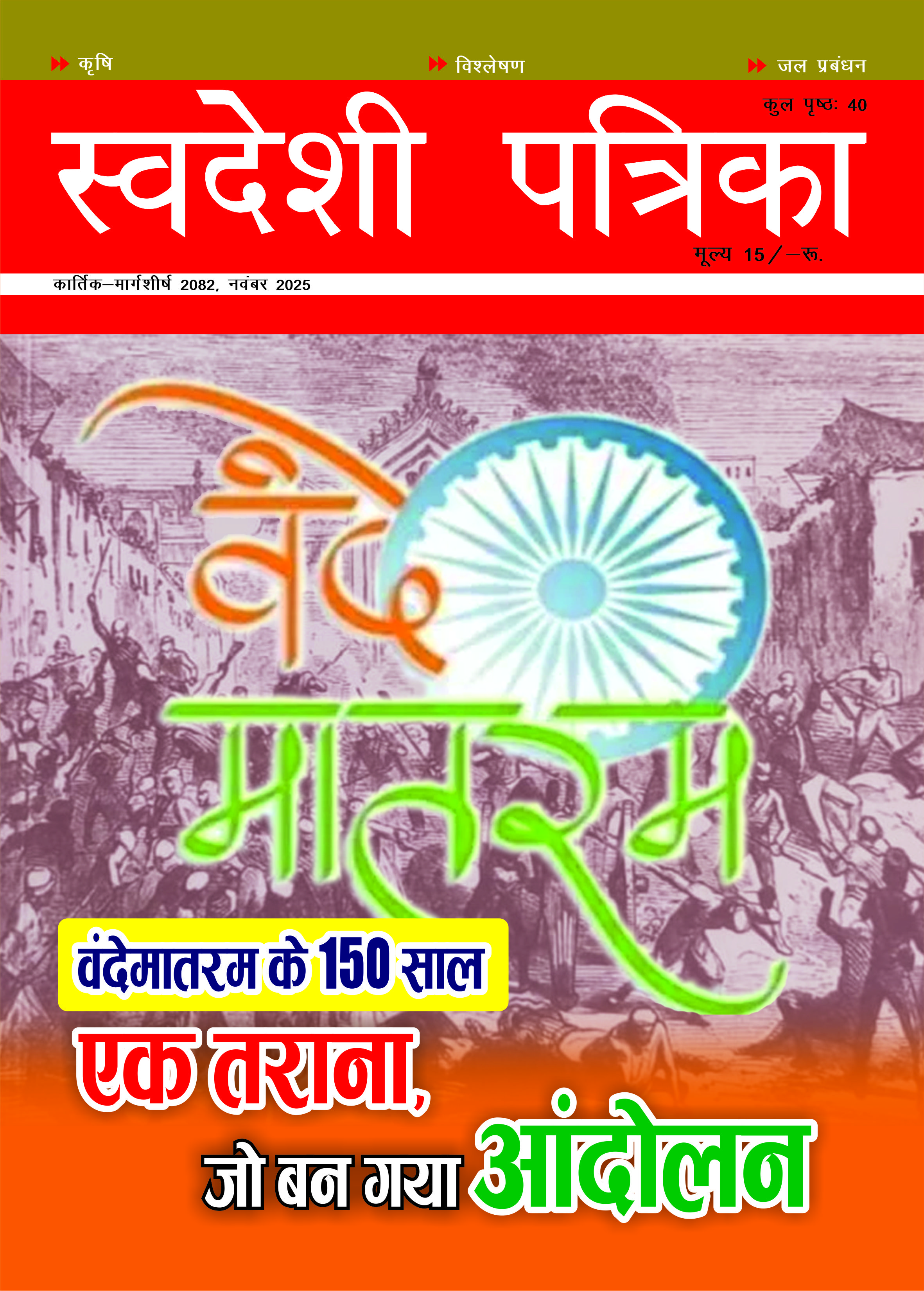

Tantra Swadeshi, Mantra Vande Mataram
Now after 150 years complete Bande Mataram is recited which would be a step to words achieving Akhnd Bhrat since division does not exist in spiritual or Adhyatmik path. — Saroj Kumar Mitra
Swadeshi is Vande Mataram in action announced Surendra Nath Benarjee in 1904. Bankim Chattarjee wrote Vande Mataram in 1875. In 1882 Bamkim published his novel Annanda Math in corporating Vande Mataram in it. According to Aurobindo Vande Mataram is a Mantra. Thus a Mantra cannot be amended nor changed in form. Even Bipin Chandra Pal a non-believer of idol or worshiping being a Brahma Samajist accepted Bande Mataram and termed it as idealtory not idolatry. The following extract from Bande Matram periodical published in 1908 edited by Aurobindo reveals how Bande Mataram derived Mantra Shakti and inspired one and all.
Sri Aurobindo said that he was exceedingly pleased to know that the song had become so popular in all parts of India and that it was being so repeatedly sung. He said that he would make this national anthem the subject of his speech. The song, he said, was not only a national anthem to be looked on as the European nations look upon their own, but one replete with mighty power, being a sacred mantra, revealed to us by the author of Ananda Math, who might be called an inspired Rishi. He described the manner in which the mantra had been revealed to Bankim Chandra, probably by a Sannyasi under whose teaching he was. He said that the mantra was not an invention, but a revivification of the old mantra which had become extinct, so to speak, by the treachery of one Navakishan. The mantra of Bankim Chandra was not appreciated in his own day, and he predicted that there would come a time when the whole of India would resound with the singing of the song, and the word of the prophet was miraculously fulfilled. The meaning of the song was not understood then because there was no patriotism except such as consisted in making India the shadow of England and other countries which dazzled the sight of the sons of this our Motherland with their glory and opulence. The so-called patriots of that time might have been the well-wishers of India but not men who loved her. One who loved his mother never looked to her defects, never disregarded her as an ignorant, superstitious, degraded and decrepit woman. The speaker then unfolded the meaning of the song. As with the individual, so with the nation, there were three bodies or kosas, the sthula, suksma and karana sariras. In this way the speaker went on clearing up the hidden meaning of the song. The manner in which he treated of love and devotion was exceedingly touching and the audience sat before him like dumb statues, not knowing where they were or whether they were listening to a prophet revealing to them the higher mysteries of life. He then concluded with a most pathetic appeal to true patriotism and exhorted the audience to love the Motherland and sacrifice everything to bring about her salvation.
Now after 150 years complete Bande Mataram is recited which would be a step to words achieving Akhnd Bhrat since division does not exist in spiritual or Adhyatmik path.
Share This