
Food is a livelihood, not a gamble. The public policy, awareness campaign, and regulatory upgradation need immediate attention. — Alok Singh
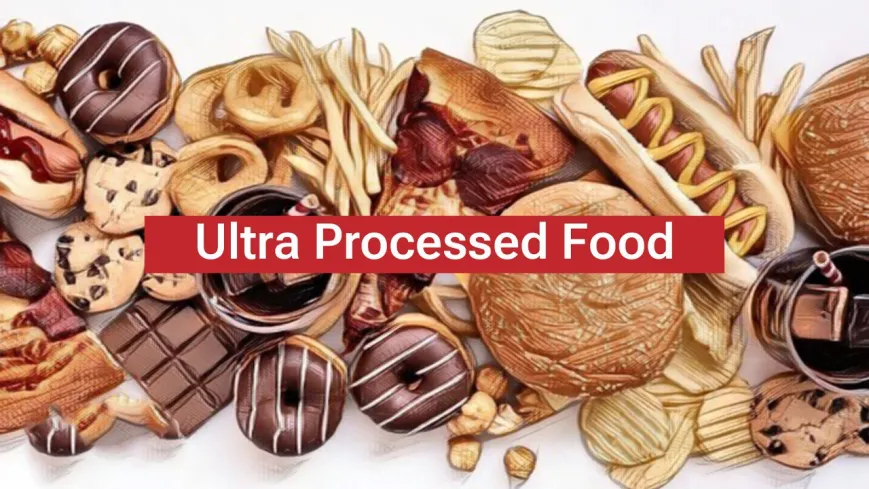
Ultra-processed food (UPF) is the subject of debate over its definition. The NOVA classification is widely used to understand and define UPF. NOVA is a noun; it’s a name, it’s not an acronym. The UPF is a ready-to-eat packaged item. It’s an item, so it’s not necessarily food people eat while eating. There is a need to further drop the term “ food while discussing UPF, rather it can be another UPI, i.e., ultra-processed item. The success of Bharat’s digital pubic infrastructure is the talk of the world. Its success gave birth to quick commerce. Quick commerce and the UPF are both unhealthy for the human mind, body, and heart.
Quick commerce is replicating the emergency services. An individual can have a medical emergency, a fire emergency, or a police emergency, but there is no way food can be an emergency service. The addiction can lead any individual to an emergency status. And if food is a behavioural emergency service, then it strengthens the scientific and social argument that UPF is an addiction. An individual knows when they will need their next meal; there is a margin of a few hours between meals, and the reinforcement of quick commerce is a hand in glove for the disaster. Ignorance is the key problem for many consumers of UPF. The foods have been classified at international forums. The international public policy community needs to be awakened against the monsters of human health.
The NOVA food classification was developed in 2009 in Brazil. It categorizes food based on the level of industrial processing. The first category is for unprocessed or minimally processed foods. The second category consists of culinary ingredients. The third category of food is processed food, and the last is ultra-processed food. Examples of unprocessed foods include fruits, vegetables, milk, and eggs. Examples of culinary ingredients include oils, butter, and other ingredients. Examples of processed food are prepared using unprocessed ingredients, such as freshly made bread and cooked vegetables. Examples of UPF include soft drinks, snacks, etc., that reach consumers after industrial processing.
The immediate challenge is to identify drinks and foods that are UPF and are clear to the satisfaction of statutory requirements. The primary reason for the rise in UPF is profit extraction by big companies. The Fortune at the Bottom of the Pyramid, authored by Harvard-educated professor of corporate strategy C K Prahalad, is a well-recognized piece in any business school. This title, “Fortune at the Bottom of the Pyramid,” clearly indicates the poor as stakeholders. The goal is to develop business models that serve the poor and, at the same time, are as profitable as any other business model. There is a success story of “Arvind Eye Hospital,” which serves the poor and truly embodies CK Prahlad’s concept of Fortune at the Bottom of the Pyramid. But unfortunately, there are big companies motivated to serve the poor by snatching their livelihoods.
The food being replaced by UPF is an example of exploitation of the poor in the name of serving the poor an affordable and accessible item, and positioning it as a food. The advertising industry itself needs strong regulation. For example, the advertisement by Nestle, having the punch line” Pappu Paas Ho Gaya, Kuch Meetha Ho jae”, is to replace the traditional sweets with Cadbury’s chocolates. The Chocolates are themselves an UPF.
Madras Cafe, established in 1964 in Green Park Main Market, New Delhi, serves only south Indian food, using ingredients sourced from Kanyakumari and cooked by chefs from Tamil Nadu, thus offering an authentic south Indian experience to people in North India. This ecosystem benefits all supply chain stakeholders, including farmers, traders, and chefs from Tamil Nadu. In contrast, other restaurants in the market offer similar menus but rely on locally sourced ingredients marketed by large companies. This difference impacts taste, health, and society. The rise of UPF is harming small supply chain stakeholders. Referring to food as merely an industry underscores this problem.
Food should never ever be industrialized. Policymakers need to understand that granting industry status to everything is the core reason for the long-term problems. The expressways have been granted industry status, which is good because it curtails the role of black money in the infrastructure sector. Granting movie-making industry status is also beneficial, as it facilitates long-term financing for big-budget productions and reduces the role of dirty money in the industry. The due diligence needs to be extensive to grant industry status to any aspect of consumption, whether mobility, entertainment, food, energy, or healthcare.
The food industry requires significant resources and a range of profit-maximizing tools, including research and development, assembly-line manufacturing, large advertising budgets, diverse product lines, and marketing strategies such as product bundling or shrinkflation (reducing quantities instead of raising prices). Food technology enables companies to secure patents and profit from each sale through franchise or licensing models. Coca-Cola profits from proprietary soft drink formulas, while Pepsi generates revenue from potato chips. These affordable, accessible products target people at the Bottom of the Pyramid, ultimately enriching their parent companies. UPFs are highly addictive. The industry practices forward integration (ownership of wholesale and retail outlets) and backward integration (ownership of raw material sources), such as manufacturers owning farmland and last-mile connectivity like quick commerce.
A zero-sum game is one in which a fixed reward must be divided among stakeholders, so that one person’s gain is another person’s loss. The food industry, from farmland to plate, has many stakeholders in its supply chain. UPF involves additional stakeholders from the chemical, packaging, and logistics industries, creating a complex web of relationships. In a zero-sum game, weaker players are at a disadvantage. Giving the food industry official status can incentivize chicanery and deceit, making the landscape risky for those involved. Food is a livelihood, not a gamble. The public policy, awareness campaign, and regulatory upgradation need immediate attention.
(Alok Singh has a doctorate in management from the Indian Institute of Management Indore and is a promoter of Transition Research Consultancy for Policy and Management.)