
It’s now or never time for our government to stay firm and press for ending this moratorium, stop revenue losses; and open new vistas of growth in e-products for our start-ups, and blocking future exploitation by global giants by circumventing physical imports through 3D printing technology. — Dr. Ashwani Mahajan
With development of technology, structure of international trade has undergone a major change. Physical goods like books and videos, once governed by traditional tariff rules, are now available as digital services. Strangely, whereas, as physical goods, they were subject to custom duties, but after they are digitalised, they become free from tariff, thanks to the tariff moratorium for trade in these digital products since 1998, when WTO member countries adopted the declaration of global electronic commerce, say electronic transmission. However, this moratorium was a temporary provision till the start of next ministerial, but it continued on the pretext that trade in digital products or E-transmission is in a nascent stage, till the time rules are framed in their regard, temporary moratorium can be a good policy. But, contrary to the belief, that it was temporary provision, every successive WTO ministerial kept on extending the moratorium. In the 13th ministerial conference at Abu Dhabi in 2024, again the same thing happened and without much debate WTO’s members agreed to extend the moratorium and this extension was valid until 31 March 2026 only or the next ministerial conference, whichever comes first.
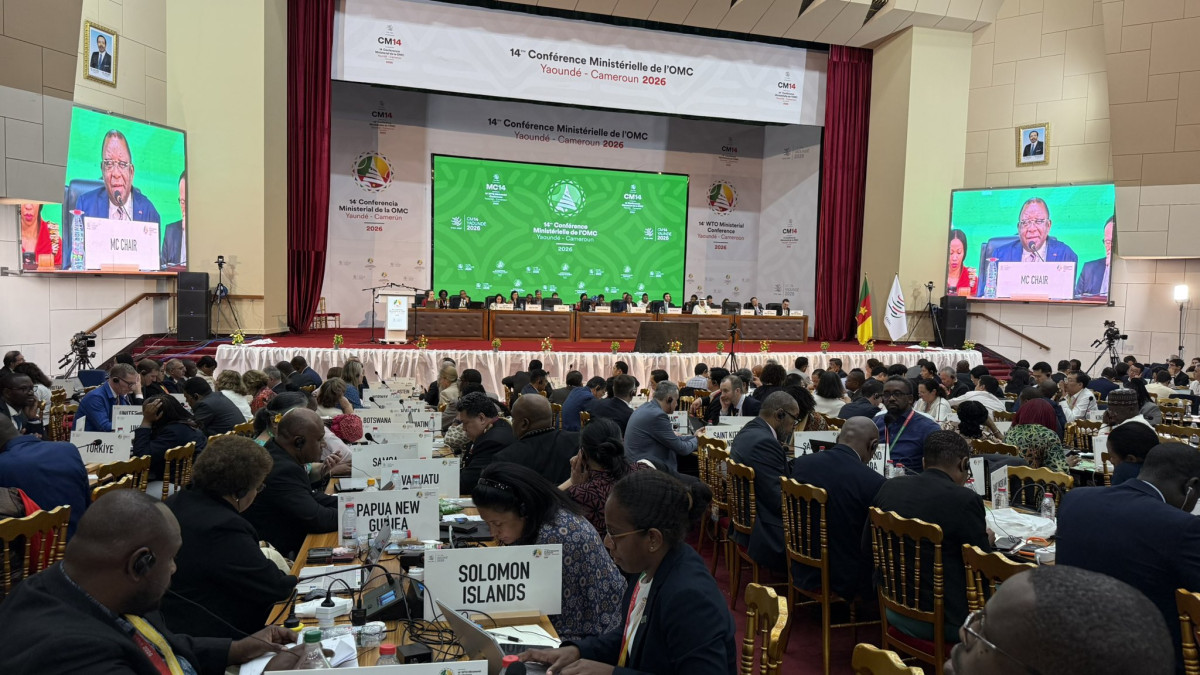
14th Ministerial Conference of WTO is scheduled in the last week of March 2026, where major issue before the conference, is to decide about the fate of moratorium on custom duty on E-transmission of digital products. As per the news reports, India is totally opposed to any continuation of the moratorium. But reports also indicate that US has been pressing for the continuation of moratorium. Now stage is set for a face-off between US and India on this issue.
Developing countries including India has been opposing this moratorium for various reasons. Though, developing countries had been opposing continuation of this moratorium, but developed nations somehow have been able to make member countries agree to the continuation of this moratorium.
Revenue loss for India
The most accepted proxy for “digital products imports” is digitally delivered services (DDS)—software, cloud, OTT, data, design, fintech, etc. As per NITI Aayog’s estimates, India imported $116.9 billion worth of digitally delivered services in 2024, up from $41.4 billion in earlier years, which shows an accelerated growth.
Another important aspect of this trade is that imports are largely coming from developed countries (US, EU platforms, software firms). We note that there is huge revenue impact of WTO moratorium on e-transmissions, as no customs duties are imposed on electronic transmissions, e.g., software downloads, e-books, movies, cloud services etc. Though for 2017, the revenue loss was estimated at $500 million but it’s likely to be much higher now due to explosion in streaming,movies digital, books, SaaS, AI tools, gaming imports (video games) etc. with rising import base of $117 billion, even the most conservative estimates put this loss to be $2 billion annually. overall revenue loss for the developing countries was estimated at US$10 billion for 2017, but it is increasing very fast, thanks to the fact that physical imports such as Books, CDs, DVDs, software disks, are fast being replaced by products delivered digitally at zero duty. For example, Imported film reel are being replaced by OTT stream, where no customs duty is imposed and collected, thanks to the moratorium. Moreover, there is import concentration. Are mostly exported by US and EU firms, India remans a net importer of high value digital products. Therefore, we can say that Tariff leakage or loss is one-sided.
Developed countries like United States, European Union, Japan and China have actively been trying to make the WTO moratorium on customs duties on electronic transmissions permanent (or at least indefinite). Latest proposals to WTO made by their institutions and chamber of commerce, speak tons about such attempts.
The US has now started pushing for an “open-ended” or indefinite extension of the moratorium at WTO discussions. The US, along with the EU and Japan, has also advocated for permanent adoption of the moratorium to maintain tariff-free digital trade. The main arguments from the US side are that firstly, digital tariffs would disrupt global digital trade; secondly, it may increase costs for businesses and consumers and thirdly, it would fragment the global digital economy.
Significantly, at the time of the start of the WTO, trade in electronic products was very limited. In such a situation, the tariff on the trade of electronic products was temporarily suspended in 1998 and it was decided to study the issues related to the global electronic trade with reference to the development needs of the developing countries and was proposed that tariffs on electronic products be postponed till the next ministerial conference.
Another important reason, why moratorium must end is that, our start-ups and software companies are able to make a variety of electronic products, where they can make movies and other entertainment products domestically, but if all such products are imported undeterred, without tariff, there is little incentive to produce them indigenously. This tariff moratorium on e products is actually killing our efforts of Atmanirbhar Bharat, benefitting US, European countries and China.
Thirdly, there are digital products which are fast replacing physical products. Many of the digital product in health, fintech, public services and many others, incorporating artificial intelligence etc. have been changing the demand patterns for these services. Failure to tax them in innovative ways is likely to bring hurdles for manufacturing these digital products indigenously.
Fourthly, with widespread adoption of 3D printing, products like auto parts, medical devices, toys, and machinery components can be traded as design files instead of goods. Customs authorities may lose the ability to track and tax trade. Manufacturing may shift to distributed digital production networks, and India may lose huge custom duties, as designs will replace physical goods’ imports, free from payment of custom duties.
Today, major issue of moratorium is not the traditional E transmission, but real issue, though new, is about Artificial Intelligence (AI). We understand that, US (and Chinese) have emerged AI monopolies, which are set to rule the world, avoiding any border taxes. If these countries are allowed to transmit AI products, free from custom duties, rest of the countries will be devoid of any tax revenues from AI, which will dominate both cross-border value flows and the national economies. As is expected that in future, share of AI in GDP will be huge, moratorium on custom duty on E transmission, will cause a huge revenue loss, and may further accentuate monopoly of US and China, which in turn will hit at the very heart of national economic sustainability, and thereby political sovereignty. Therefore, the issue of e-transmission has become much more complicated, than what it was, in the past.
All over the globe, talks are on about regulating AI, in view of its disadvantages in terms of loss of employment. Therefore, globally demand is being raised that to help saving employment, there is a need to tax AI services. In this regard, Economic Survey, 2025-26 has come out with an idea, and suggested “Companies that replace labour with AI and earn higher profits may face taxation on those incremental profits to compensate for job displacement.”
But if we allow AI services to enter into Indian markets from overseas at zero custom duties, we will not have any right to impose tax on domestically provided AI services. Therefore, a policy space to regulate AI will be lost.
Moreover, we understand that while US, China and some other major economies have led the AI revolution and have the advantage of being the first mover, but India has also been trying very hard to develop its digital public infrastructure (DPI) and become an active player in AI. However, if we allow digital products via E transmission to enter Indian territory, free from custom duties, India would lose hugely, not only by discouraging, our domestic enterprises, mostly start-ups to emerge big, but also will lose an opportunity to tax AI services, which is also essential from the point of view of saving its population from unemployment.
It’s now or never time for our government to stay firm and press for ending this moratorium, stop revenue losses; and open new vistas of growth in e-products for our start-ups, and blocking future exploitation by global giants by circumventing physical imports through 3D printing technology.