India’s foreign policy increasingly reflects a balancing strategy. On one hand, India participates actively in BRICS. On the other hand, India is also a member of the Quadrilateral Security Dialogue alongside the United States, Japan, and Australia. Consequently, India occupies a unique position. — Annu Kumari
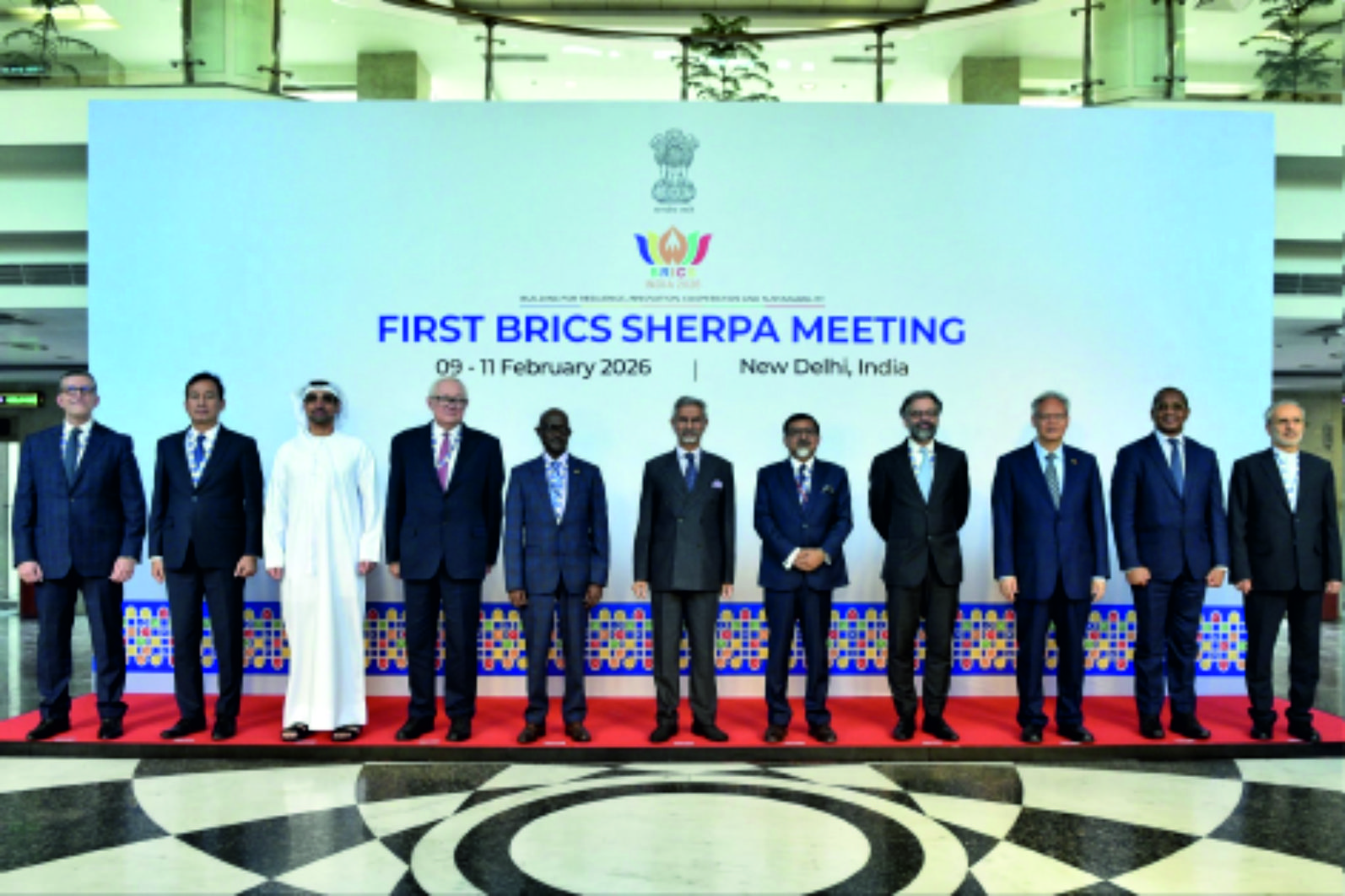
BRICS began as a grouping of major emerging economies that were expected to play a larger role in the global economy owing to large populations, substantial territories, rapidly growing economies and increasing influence in international politics. The term “BRIC” was coined in 2001 by economists at Goldman Sachs to refer to Brazil, Russia, India and China, which were projected to become major drivers of global economic growth in the 21st century. The first BRIC summit was held in 2009, and in 2010 South Africa joined the grouping, transforming it into BRICS.
To be noted, it was never founded with the motive of anti-western alliance though today it appears more like an anti-western alliance. The founding motive of BRICS was to increase the voice of emerging economies in global governance not to create an anti-Western alliance. Importantly, BRICS founded with motive of expanding economic cooperation among major developing countries.
The founding members characteristics of BRICS represents that originally it was a club of major emerging powers rather than merely a coalition of developing countries. Lately, the expansion of BRICS is a cause of concern which is also facing a growing criticism from the western countries. The primary reason behind the criticism of recent expansion of BRICS lies in its new members which include countries that do not necessarily possess the demographic, economic, territorial or geopolitical scale that originally characterized the founding members. The original concept of BRIC appears to be diluted amid this expansion as admitting countries lack comparable economic or geopolitical weight which in turn changes the nature of the grouping ultimately. Today, BRICS appears like a broader political bloc with less coherence and fewer shared characteristics. With more diverse membership, it may become harder to maintain consensus on economic reform, trade, development finance and geopolitical issues.
Moreover, China’s relative influence within BRICS has strengthened due to this expansion. With the addition of smaller economies, Beijing can increase its ability to build coalitions and shape agendas as China is by far the largest economy in the bloc. BRICS expansion serves the objective of China to create a larger diplomatic network supportive of its economic and geopolitical interests.
However, there is a paradox. The BRICS expansion may increase China’s diplomatic reach but at the same time it could also make BRICS less effective as a decision-making body. For example, Saudi Arabia and United Arab Emirates are partners in many areas but also compete for regional influence, investment, logistics hubs and economic leadership in the Gulf. Similarly, other members have differing positions on energy markets, regional conflicts and relations with major powers. So, to achieve consensus will become an uphill task within BRICS.
Concerns regarding BRICS Expansion: Form Indian Lens
A major feature of India’s BRICS trade is that it is highly concentrated. China is India’s largest BRICS trading partner whereas Russia’s share surged after 2022 because of discounted oil imports. Trade with Brazil and South Africa is comparatively modest. While new BRICS members such as Saudi Arabia and UAE are important energy suppliers.
The more important number for geopolitics is not total BRICS trade but relative dependence. China accounts for largest share of all BRICS exports. On the other hand, India accounts for a much smaller share. Many BRICS members trade more with China than with India. Also, several new members are heavily integrated into China’s trade, energy, infrastructure, or investment networks. This is one of the reasons why some Indian strategic analysts worry that BRICS expansion increases China’s structural influence.
For China, a larger coalition allows it to present its positions as broader Global South concerns rather than merely Chinese interests. Therefore, it can be stated that BRICS expansion will indirectly strengthens China’s influence in forums such as the UN, WTO, IMF, and World Bank.
However, it also needs to noted that many BRICS members have interests that differ from China’s. For instance, India has border disputes and strategic competition with China. While Brazil generally pursues an independent foreign policy. Importantly, Saudi Arabia maintains close security ties with the United States, whereas United Arab Emirates balances relations among China, the U.S., India and Europe. Egypt and Ethiopia have disagreements on regional issues. As a result, BRICS is not comparable to a military alliance where members are expected to vote together. To conclude, China supports BRICS expansion to increase its diplomatic influence and strengthen demands for a more multipolar world order, but the diversity of BRICS members means Beijing cannot assume automatic support in the UN, WTO, IMF, or other international bodies.
For India BRICS is not the platform of de-dollarisation
The role of the U.S. dollar in the international financial system is one of the most important debates within BRICS. It is important to distinguish between dollarisation and weaponisation of the dollar. Dollarisation refers to the widespread use of the U.S. dollar in international trade and finance. Whereas weaponisation of the dollar refers to the use of the dollar’s dominant position in the global financial system to impose sanctions, restrict transactions or exert political pressure.
India’s position is generally better understood as opposition to the weaponisation of the dollar rather than opposition to the dollar itself. As India continues to hold substantial dollar reserves and conduct large volumes of trade in dollars. Also, India benefit from access to dollar-denominated financial markets. Therefore, India is not advocating the replacement of the dollar as the world’s reserve currency. In its place, India supports creating alternative payment mechanisms and local-currency settlement options so that countries are less vulnerable to unilateral financial pressure.
India’s Strategic Balance
India’s foreign policy increasingly reflects a balancing strategy. On one hand, India participates actively in BRICS. On the other hand, India is also a member of the Quadrilateral Security Dialogue alongside the United States, Japan, and Australia. Consequently, India occupies a unique position. Through BRICS, it can advocate against the weaponisation of global financial systems. Through the QUAD, it can maintain strategic partnerships with major democracies and help balance China’s rise in the Indo-Pacific.
The dual engagement of India demonstrates that it seeks strategic autonomy: supporting reforms to the international order while maintaining productive relations with both western powers and emerging economies.
Annu Kumari: Assistant Professor, Sri Aurobindo College (Evening), University of Delhi