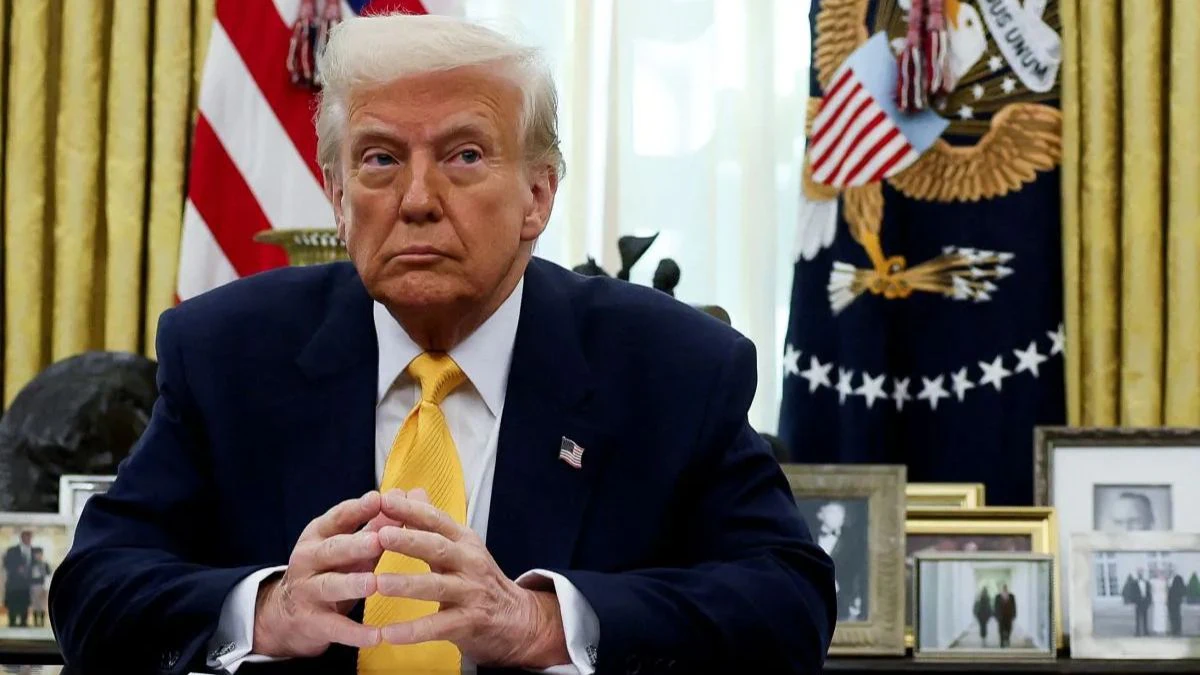
The U.S. Supreme Court, in a 6-3 majority decision, has struck down the sweeping tariffs imposed by President Donald Trump under emergency provisions. The Court held that existing law does not grant the President unlimited authority to impose broad-based tariffs under the guise of national emergency powers. The ruling significantly curtails the administration's far-reaching tariff agenda and introduces fresh uncertainty into global trade negotiations. For India, the decision comes at a delicate moment. New Delhi had agreed to a draft framework for an interim trade arrangement with Washington amid escalating tariff threats. However, repeated and sometimes contradictory statements from the U.S. administration created confusion, inviting domestic criticism within India. In the wake of the Court's ruling, India has reportedly postponed further negotiations, with policymakers and trade officials reassessing the altered landscape. Since the beginning of Trump's second term, aggressive tariff escalation has become the defining feature of U.S. trade policy. Supporters framed the strategy as a necessary correction to decades of industrial decline; critics described it as economically self-defeating. Even segments of Trump's political base began questioning the sustainability of sweeping protectionism.
Historically, the United States was both a high-cost and highly competitive industrial economy. Through much of the twentieth century, it led global production in automobiles, electronics, chemicals, textiles, and machinery. Tariffs once served both as protection for domestic industry and as a meaningful source of federal revenue. Over time, however, tariff barriers were reduced to ensure cheaper imports for American consumers. The institutionalization of lower trade barriers after the creation of the World Trade Organization in 1995 deepened this trajectory. The result was a structural shift. While American consumers benefited from lower-priced goods, manufacturing employment declined. Yet this narrative is incomplete. As low-end industrial production migrated abroad, the U.S. consolidated its dominance in high-technology industries, pharmaceuticals, advanced defense systems, intellectual property, financial services, and space technology. Even after the introduction of the euro in 1999, the U.S. dollar retained roughly 60 percent of global reserve currency share - a reflection of enduring strategic and technological strength. In other words, the United States did not collapse industrially; it repositioned itself at the commanding heights of the global economy. The administration argued that higher tariffs would generate substantial revenue while revitalizing domestic industry. Tariff collections reportedly rose to approximately $287 billion in calendar year 2025, compared to $70-80 billion in earlier years. Yet even at that elevated level, tariffs constituted only around 4-5 percent of total federal revenue, compared with roughly 2 percent historically. The overwhelming bulk of federal receipts continues to derive from income taxes and payroll contributions. The macroeconomic cost, however, has been far more visible. Tariffs function as a consumption tax on imported goods. The immediate burden falls not on foreign exporters but on domestic importers and ultimately consumers. Higher import prices reduce purchasing power, contribute to inflationary pressures, and complicate monetary policy. The risk of interest rate tightening - amid already elevated price levels - further weighed on economic sentiment.
For decades, open access to the American market fostered political and commercial goodwill. Countries exporting to the U.S. often reciprocated by providing opportunities for American firms, generating profits, royalties, and tax revenues from overseas operations. High tariffs reverse that logic. Instead of reinforcing economic interdependence, they encourage diversification away from the U.S. market. There are early signs of systemic adjustment. Greater use of local currencies in trade settlements, and the growing prominence of blocs such as BRICS, signal gradual recalibration in global economic alignments. While the dollar's dominance remains intact, persistent trade friction risks accelerating long-term structural shifts. Though the President could theoretically seek legislative authorization to restore sweeping tariff powers, Republican majorities in Congress remain narrow, and internal dissent on trade policy is visible. The Supreme Court's decision therefore places institutional limits on executive unilateralism. The administration has floated alternative mechanisms, including a temporary global tariff under Section 122, initially announced at 10 percent and then revised to 15 percent. When combined with the pre-existing Most Favoured Nation duty of roughly 3.3 percent, this yields an effective tariff burden of approximately 18.3 percent on imports - lower than the earlier 25 percent but applied uniformly. That uniformity alters the calculus for India. Under the draft interim agreement, India expected relatively more favorable treatment compared to competitors. If tariffs become globally standardized, the preferential advantage narrows or disappears.
India now faces a recalibrated trade environment. If discriminatory tariffs are legally constrained, New Delhi gains negotiating space. At the same time, uncertainty surrounding U.S. policy - and the possibility of alternative executive measures - warrants caution. Postponing negotiations appears to be a tactical pause rather than a retreat. The broader lesson is structural. Tariffs may serve as short-term political instruments, but they rarely substitute for competitiveness, innovation, and strategic industrial policy. The Supreme Court's intervention underscores that even in times of economic nationalism, institutional checks remain central to American governance. Whether President Trump adapts or escalates remains to be seen. For now, the judicial branch has imposed limits on executive trade power. For India, the prudent course is vigilance, flexibility, and preservation of negotiating leverage.