Reset of Bharat’s Strategic Autonomy
Bharat: Strategic Autonomy Vs Constructive Strategic Stability
To become a Viksit Bharat, Bharat must play a more proactive role and truly avoid bowing to anyone, as Modi frequently states. Its credibility among the Global South and within its neighbourhood is at stake. Strategic autonomy is indeed in need of a reset. — Vinod Johri
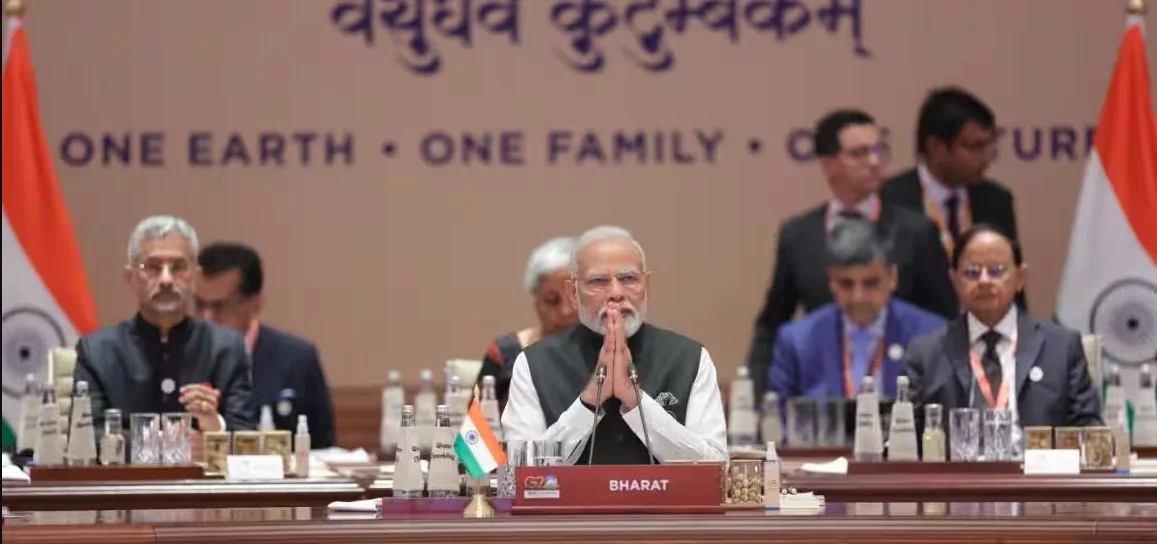
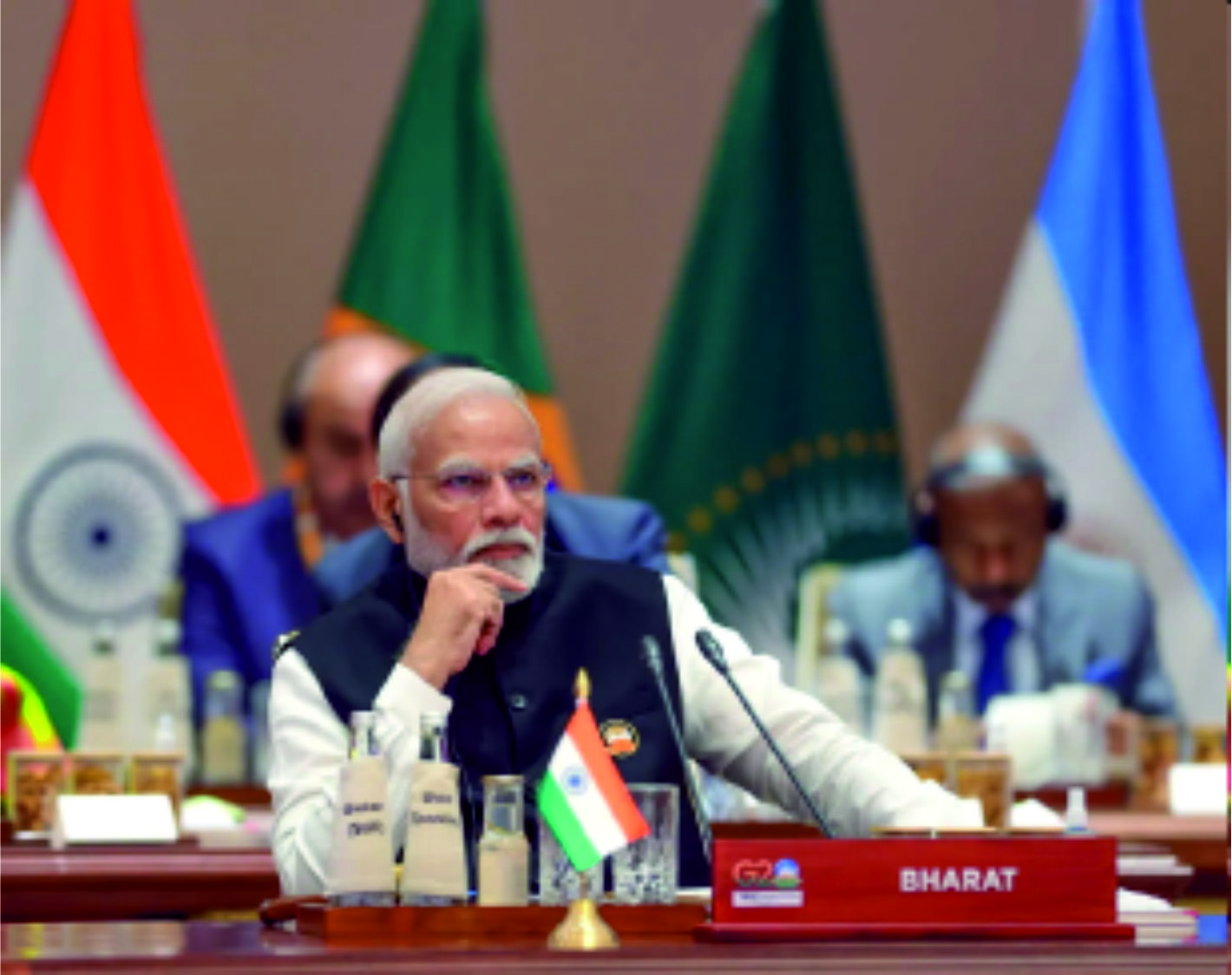
The world has been more turbulent since beginning of 2025. Prime Minister Narendra Modi said on the anniversary of the nuclear tests: “India will not bow down to anyone”. It heralded the successful execution of its strategic autonomy.
However, it has been a daunting challenge during the US President Donald Trump’s tenure and China’s disruptive role post Operation Sindoor. Pakistan may be seen as balancing its strategic interests but it is faithfully playing the role as dictated by the US and China at the cost of its fiercest internal revolt in the entire country.
Punitive tariffs and multiple sanctions, along with waivers on Russian military platforms, Russian oil, and Chabahar Port, have taken their toll. During the recent BRICS Foreign Ministers’ meeting in New Delhi, External Affairs Minister S Jaishankar criticised unilateral non-UN sanctions on Bharat, calling them “unjustified”, even as Delhi awaited waivers on Chabahar and Russian oil. Later at the conference, he noted the unnecessary resort to unilateral coercive measures and sanctions, which are inconsistent with international law and the UN Charter. These measures “disproportionately affect developing countries”. But it is too late to say so.
Strategic autonomy has yet to tread a long way despite the deals with the EU and France. The purchase of 36 Rafale fighters in 2016, subsequent contracts for 18 naval versions, together with the rejection of US, Russian, European, and Swedish offers were seen as a combination of advanced technology and trust. Bharat has not defied Trump’s coercive tariffs and warnings over de-dollarisation in BRICS. The IRIS Dena, an Iranian Moudge-class frigate was torpedoed and sunk by the United States Navy’s nuclear-powered submarine USS Charlotte in the Indian Ocean on 4 March 2026, after it returned from the Indian Fleet Review 2026. It dented Bharat’s image as a net security provider.
‘Strategic’ is associated with restraint, sovereignty, and national interest. ‘Partnership’ is variable, dynamic, and transactional. Strategic autonomy originates from non-alignment adopted after independence. With adversarial relations with the US intensifying, Bharat was gradually pulled towards the Soviet Union. Confronted with simultaneous threats from Pakistan, China, and the US in 1971, Bharat was compelled to sign the first formal Treaty of Peace and Friendship with the USSR. The then Prime Minister Indira Gandhi insisted that the phrase “India is a non-aligned country” be inserted into the treaty, although it functioned de facto as an alliance.
BharatIOn has evolved from non-alignment to multi-alignment, multi-engagement, and multipolarity, culminating in strategic autonomy, whose utility appears to be diminishing in a disrupted global order. The strategic autonomy remains an immaculate conception. With Bharat’s oldest ally, Russia, the relationship is special, privileged and strategic. The partnership with the US has evolved from an estranged democracy into a comprehensive, global and strategic partnership. Relations with China have fluctuated between war and border skirmishes, signifying deep mistrust. The EU is a more recent entrant into the strategic club, though largely in trade and commerce. Relations with Vietnam were elevated to an enhanced comprehensive strategic partnership during the recent visit of President To Lam.
Lately, there has been intense debate regarding strategic autonomy and Bharat’s graded strategic relations with other nations. Strategic autonomy is a dynamic policy that requires periodic recalibration in line with contemporary geopolitics and geo-economics. The recent summit between Xi Jinping and Donald Trump in Beijing confirmed a shift in the US strategic approach towards China — from rivalry and competition towards stable relations. Diplomatic vocabulary acquired a new phrase from Xi: “constructive strategic stability”, replacing the Biden-era term “strategic competition”. Trump went further in a Fox News interview, describing the meeting as resembling a “G2”, recalling earlier remarks made by President Obama that had caused consternation. Trump displayed unusual restraint and respect towards Xi, praising his leadership extensively. The subsequent Xi-Putin summit was described as a meeting between the dear friends in an everlasting strategic partnership. In both cases, Xi conceded little to either Trump or Putin. These developments call for a reassessment of Bharat’s strategic autonomy.
At the recent Chennai conference, the majority opinion supported the establishment’s approach, calling it ‘pragmatic’. In February 2025, Prime Minister Narendra Modi had undertaken a major diplomatic tour to France and the United States from February 10 to 13 though the progress in trade deals with the US has been slow. Prime Minister Narendra Modi’s international engagements focused on artificial intelligence governance, bilateral trade, and strategic defense agreements with Western leaders. Regarding the two kinetic assaults on Iran, critics argued that Bharat had effectively taken sides even before the conflict began. It appeared aligned with the US and Israel, particularly after Modi addressed the Knesset 48 hours before the Iranian Supreme Leader was assassinated in an Israeli precision strike. Apparently, both US and Indian intelligence agencies believed the conflict would end swiftly. Delhi remained silent, despite PM Modi’s earlier repeated assertion that “this is not an era of war” and that only a political solution could resolve conflicts. Bharat’s attempt to balance strategic relations with the US, Russia, China, Israel, the EU, and Vietnam has resulted in too many competing priorities.
Some voices have been raised that Bharat’s recent diplomatic difficulties might have been avoided with more skilful handling of Trump’s claim that the US facilitated the ceasefire during Operation Sindoor. There may be conflicting views over this assertion. Donald Trump kept on reiterating that he facilitated the ceasefire even during the Operation Sindoor without Bharat’s asking for it. Bharat’s insistence that there was no third-party mediation was based on truth and ground reality. The US role even during Bharat-Pakistan war 1971 was embedded with its strategic interests. The United States, Britain, and China used the United Nations to manage the Kashmir dispute for decades, but the prolonged diplomatic process ultimately resulted in approximately half of the region remaining outside of Bharatiya control, divided between Pakistan and China. Pakistan financially, diplomatically and militarily aided by the US and China since its formative years, tried to transform its image from a state sponsor of terrorism into that of a responsible mediator in conflict resolution but this is only a façade to mislead the world.
Pakistan’s aborted efforts failed to facilitate the impending ceasefire between the US and Iran, where Israel is conspicuously absent. Let us watch the future developments in the unending US-Iran war instead of evaluating Bharat’s strategic strength in the Indian ocean region and South Asia. But it is sure that Bharat was assert itself in South Asia as a strong nation and as a protector of South Asian countries both in economic and strategic cooperation despite China and the US having their interests in the region.
At another seminar, Bharatiya diplomat Jawed Ashraf remarked emphatically: ‘Silence is not strategic autonomy’, hinting at Bharat’s silence regarding what many consider illegitimate actions by the US and Israel against Iran and others. To become a Viksit Bharat, Bharat must play a more proactive role and truly avoid bowing to anyone, as Modi frequently states. Its credibility among the Global South and within its neighbourhood is at stake. Strategic autonomy is indeed in need of a reset.
(Source: The PIONEER 27.05.2026, India’s strategic autonomy needs a reset By Ashok K Mehta. The author’s views in Italics are personal.)