
Chanakya’s “Saam, Daam, Dand, Bhed” is an ancient Bharatiya strategic concept for achieving goals, outlining four approaches: Saam (conciliation/ negotiation), Daam (bribery/incentives), Dand (punishment/force), and Bhed (creating division). — Vinod Johri
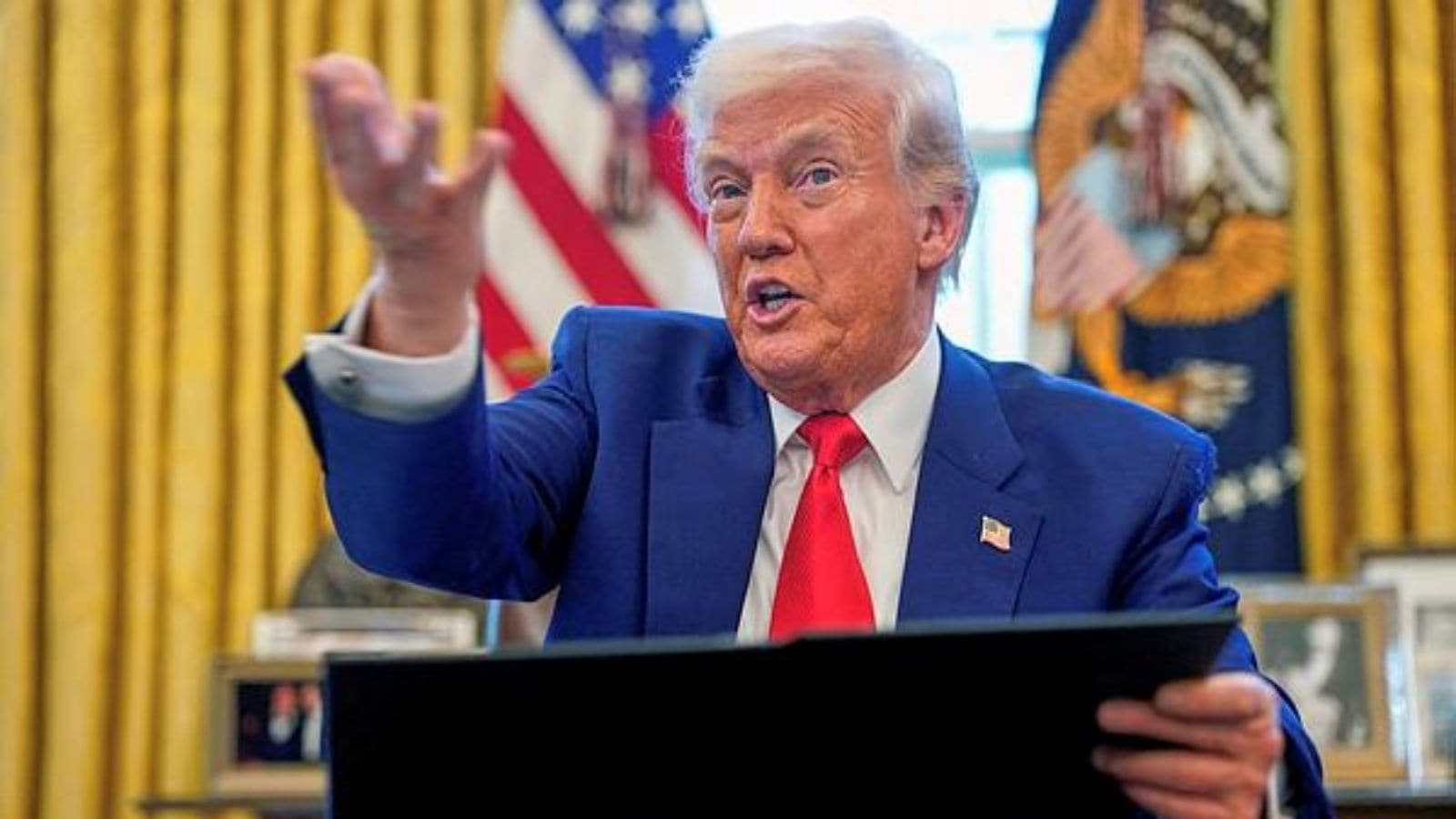
Chanakya seems to have inspired US President Donald Trump by Arthshastra Niti of Sam, Dam, Dand, Bhed while taking on the world by his tariff policy having several dimensions of imposing retaliatory taxes on imports, sanctions targeting his main rivals and emerging economies, banning individuals and companies of several countries competing with the US corporates. In this article, an effort has been made to discuss the US tariff fallout in the US economy and the briefly, recent crude oil import hurdles for Bharat.
Chanakya’s “Saam, Daam, Dand, Bhed” is an ancient Bharatiya strategic concept for achieving goals, outlining four approaches: Saam (conciliation/ negotiation), Daam (bribery/incentives), Dand (punishment/force), and Bhed (creating division). These are used in sequence, starting with the most peaceful and escalating to the most forceful means to achieve a desired outcome.
US discriminatory tariff policy has already created worldwide disorder resulting in global trade targeting mainly China, Russia and Bharat. Sometimes, European Union seems toeing US diktats. Some claim that it has helped US economy and the steering MAGA while many economists have pointed to over 50 days shutdown in the US as a result of faltering on tariff policy and domestic upheaval within US evidenced by loss of Governor posts in three states and loss of New York to Zohran Mamdani as Mayor, strong opponent of Donald Trump. What the world perceived Donald Trump’s decisions in putting on hold the imposition of tariffs for certain time, was guided by the compelling economic conditions and immediate fall out on the US trade. Trump’s actions are not berserk as he is sometimes criticised, but are well calculated with far-fetched outcomes. Though, it is all about his calculations and strategies, but it seems absolutely clear that the US is facing severe disparagement and rebalancing the global trade. His indulgence in West Asia has also imbalanced the security concerns for Bharat which is far beyond the tariff fallout.
US tariff is facing legal battle at home before the Supreme Court. U.S. investors returning from Labor Day break were hit with fresh uncertainty in trade policy after a federal appeals court ruled most of President Donald Trump’s sweeping tariffs illegal. The court allowed the tariffs to remain in place through October 14, 2025 to give the Trump administration a chance to file an appeal with the U.S. Supreme Court. But the verdict did not affect tariffs slapped on steel and aluminum. Several market participants said they were in a wait-and-watch mode for now, as the case is expected to head to the Supreme Court, but the brewing uncertainty is adding to markets’ list of worries, including concerns around the Federal Reserve’s independence and increasing risks of U.S. stagflation. One of the tariff authorities the administration can use, he added, could be Section 338 of the Smoot-Hawley Tariff Act of 1930, which allows the President to impose tariffs of up to 50% for five months against imports from countries that are found to discriminate against U.S. commerce.
Treasury Secretary Scott Bessent said on Monday the administration has a backup plan if the Supreme Court does not uphold Trump’s use of emergency powers to impose tariffs. Trump’s steep levies on trading partners triggered market volatility in early April, 2025, but increasing clarity on tariff levels and hopes of interest rate cuts have since helped stocks rebound toward record highs.
While the investors and corporates are worried in the United States, there are mixed results in the short-term. Wall Street’s main indexes fell about 1% on Tuesday, while longer-dated U.S. Treasury yields jumped, amid a global bonds selloff on fiscal worries. ”Whether it’s the level (of the tariffs) or the timing or now questions about their validity, we’ve just got to let it play out,” said Jim Baird, chief investment officer at Plante Moran Financial Advisors about the latest court ruling. What it will mean in the near term remains to be seen. How will US trade partners react to that? How quickly will this make its way through the Supreme Court now? Lots of questions, not a lot of answers. “On a more intermediate term basis, we think corporate uncertainty around tariffs will remain elevated, though lower than late spring levels,” RBC’s Head of U.S. Equity Strategy Lori Calvasina said.
Raymond James Washington Policy Analyst Ed Mill said there are multiple other tariff authorities available to the Trump administration, supporting the view that “the process might change, but the outcome on tariffs will largely stay the same.” However, several investors fear that if the current ruling is upheld, the U.S. may have to issue tariff refunds to its trading partners - a move that could deepen fiscal concerns. “The big question will be whether the courts deem that all tariffs collected under emergency powers must be refunded, which at this point could be a (nearly) $200 billion decision,” strategists at Glenmede said in a note.
The US economy shrank at the start of the year, restrained by weaker consumer spending and an even bigger impact from trade than initially reported. Gross domestic product decreased at a 0.2 per cent annualized pace in the first quarter, the second estimate from the Bureau of Economic Analysis. That compared with an initially reported 0.3 per cent decline. The economy’s primary growth engine — consumer spending — advanced 1.2 per cent, down from an initial estimate of 1.8 per cent and the weakest pace in almost two years. Meantime, net exports subtracted nearly 5 percentage points from the GDP calculation, slightly more than the first projection and the largest on record. In separate data, continuing jobless claims, a proxy for the number of people receiving unemployment benefits, rose to the highest level since November 2021. Initial claims also increased, according to Labor Department figures released Thursday.
Forecasters largely expect GDP to rebound in the second quarter as higher duties discourage imports, and the goods already brought in will accumulate in larger inventories that add to growth. Beyond that, economists and policymakers will be paying close attention to how Trump’s policies — including trade, but also immigration and taxation — will impact consumer and business spending going forward. While recent reports have pointed toward tamer inflation, Fed officials are still wary of price pressures rearing back up again, and, combined with heightened uncertainty, are keeping interest rates on hold for now.
Initially, economic growth was dragged down at the start of the year by a surge in imports as US businesses tried to get ahead of President Donald Trump’s tariffs. More moderate consumer spending, as well as a decline in federal government spending, also weighed on the figure. Since then, the White House has walked back or delayed some of the more punitive levies, and most of the tariffs have been blocked by a US trade court. While the pauses have helped calm Americans’ concerns about the economy and prompted many economists to scrap their recession calls, tariff rates are still substantially higher than before Trump took office.
Donald Trump has refused trade talks with Bharat until tariff issues are settled. This follows the US raising tariffs on Bharatiya imports to 50%. The US trade negotiators are still expected to visit New Delhi later this month for trade agreement talks. A Bharatiya official confirmed that the visit is still on schedule. US President Donald Trump has ruled out the possibility of trade negotiations with Bharat until the issue of tariffs is resolved. “No, not until we get it resolved,” Trump told reporters in the Oval Office on in first week of August, 2025, replying to a question on whether he expects increased trade negotiations with Bharat after raising the tariffs on the country to 50%. His statement comes ahead of the scheduled visit of US trade negotiators to New Delhi later this month for the sixth round of the Bilateral Trade Agreement (BTA) talks. “There is no fresh communication from the US. The visit stands as of now,” said a Bharatiya official. Though, Trump may visit Bharat in early 2026, yet nothing seems to have moved which may relax the tariff on Bharat and slashing of sanctions which may ease purchase of crude oil from Russia. In the meantime, buying of crude oil from the US has picked up substantially.
Bharat’s efforts in maintaining crude supplies for domestic consumption and refining industry must be appreciated despite the severe sanctioning action by the US. Bharat’s resilience in the global trade is exemplary. October crude oil imports from US have sustained in November 2025. Flows expected at 4,50,000–5,00,000 b/d in November, 2025 compared with a year-to-date average of around 3,00,000 b/d, say experts as New Delhi balances energy economics and geopolitical strategy. Our November 2025 crude oil imports from the US, which dislodged the UAE as fourth largest crude oil supplier in October, are expected to remain at last month’s level as the world’s third largest energy consumer balances market economics and trade considerations. According to the global real time data and analytics provider Kpler, Bharat imported a record 5,68,000 barrels per day (b/d) from the US in October 2025 — the highest since March 2021.
In the next article, an effort will be made to further elaborate the global impacts of US tariffs as the reports and data from several sources and countries keep coming up and the geopolitical consequences are manifested.
Sources: Reports, news and editorials in the Economic Times, Times of India, The BusinssLine, The Financial Express, The Pioneer, The Business Standard, Reuter and The Guardian.