It is too early to foresee the US Tariff’s long-term impacts on global trade. But one thing is sure that the US has set the tone of self-reliance in the developing countries, finding alternative markets, pooling of their own resources and minimising dependence on the US. — Vinod Johri
In the living memory of most people on earth, the world economy has been characterized by the hegemony of the US dollar. For the most part, that has been very much a reflection of US economic, financial and military dominance. As the economist Charles Kindleberger had pointed out many decades ago, money is about power, and international money is about international power.
The dynamics of world trade are changing rapidly. For the last few years, the developed countries are redefining the rules of world trade which are detrimental to the growth and sustenance of the developing countries. On one hand, they are protecting their economies by raising tariff and non-tariff barriers, and on the other, they are preaching to the developing countries to open their markets to their companies. This has disrupted world trade as never before. The developing countries cannot take this blow as they are heavily dependent on the markets of developed countries. This has led to an alarming situation where world trade is undergoing a sea change — supply chains are broken, goods prices are negatively impacted, unemployment rising, manufacturing base dwindling — leading to a slowdown of growth and, in some cases, even going down south as the debt burden rises for the vulnerable economies. But in the long run, such hegemonic rules of trade are also detrimental to the national interest of the developed countries.
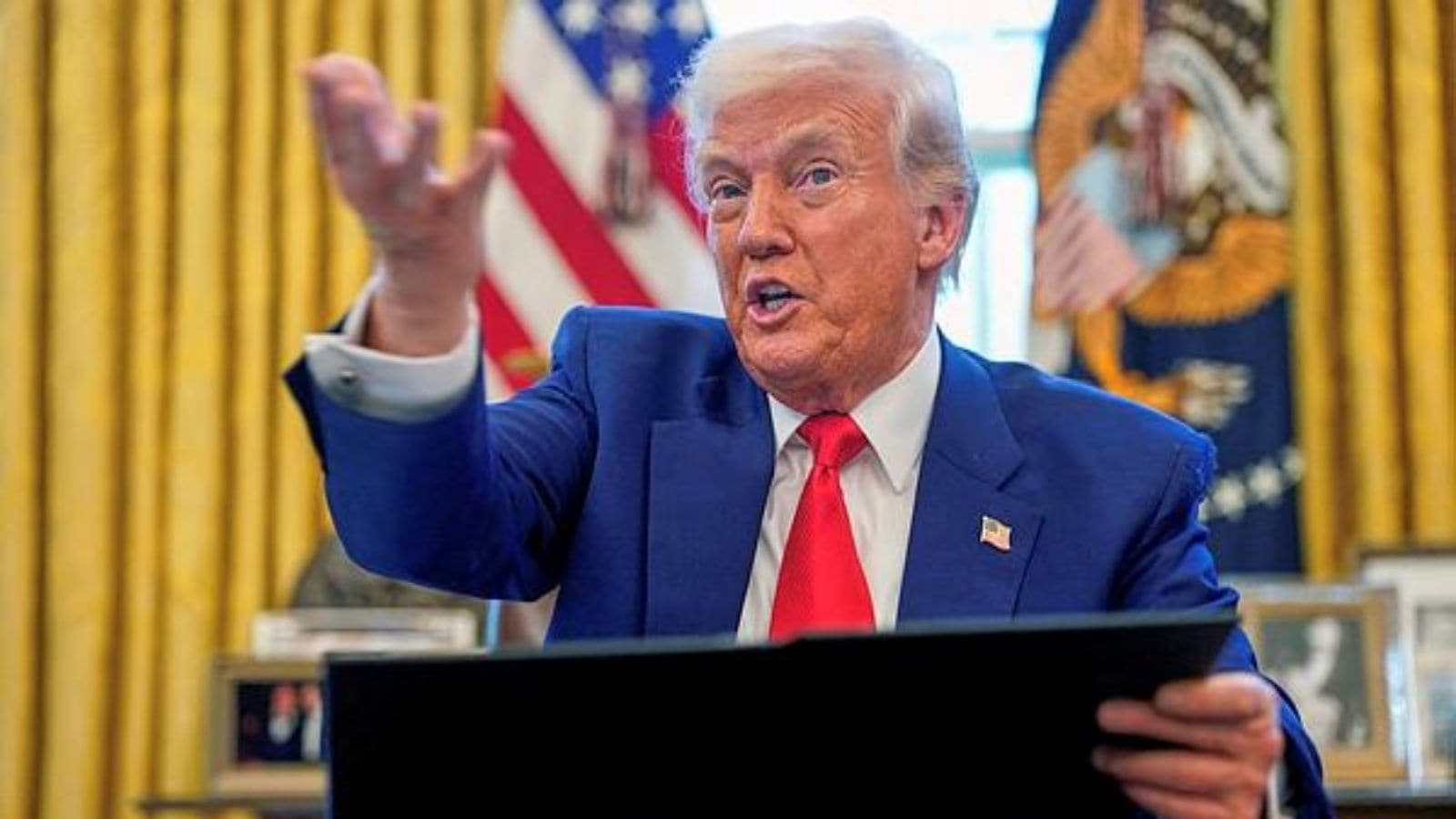
The US President Donald Trump is stuck with his tariff sanctions with point of no return. Once hailed as a MAGA catalyst, the US tariff is not helping MAGA aspirations. The Bhartiya Desis are in a doom spiral in the MAGA world. The populist, nationalist fervor that has defined the MAGA movement is now fueling a fierce internal conflict, with pro-Trump Bharatiya-American conservatives like Dinesh D’Souza and Kash Patel finding themselves on the receiving end of the xenophobic attacks that critics say they once helped mainstream.
The tariff diplomacy has come to global centre stage in the wake of the chaos and confusion unleashed by US President Donald Trump’s tariff wars ostensibly meant to reduce US bilateral trade deficits, which have been combined with an apparently contradictory attempt to maintain dollar supremacy. The US $30 Trillion economy, World’s No. 1, is in fact smarting under its own pressure. The analysts are busy with data dissecting worldwide tariff repercussions but are surprised how the US sanctions are spurring growth of the targeted countries after initial disruption. Trump’s calculations have gone awry.
But it is too early to foresee any dip in the US economy. Today 57 per cent of global trade (some other sources estimate global Dollar invoicing close to 65%) is invoiced in dollars, signifying the US currency’s strength. The total amount of US dollars in global reserves is not precisely tracked, but the most recent data (Q2 2025) shows that US dollar holdings in global foreign exchange reserves were approximately $6.77 trillion which represents about 53.6% of the total allocated global reserves and which stood at approximately $12.94 trillion in Q2-2025, as per Statista. There are extreme views of the economists worldwide but realistic analysis is imperative though at no point of time, any such estimations are final.
There are now two distinct views about whether the US dollar will maintain its current powerful status. One posits that US economic power is clearly on a declining trend, possibly accelerated by Trump’s policies, so the dollar’s role will inevitably diminish. There are different views on whether this means that another currency (most likely the Chinese Renminbi) will take its place, or rather a period of uncertainty will set in, with several contenders (including the dollar) but no clear winner. The international role of the Chinese Renminbi has received increased attention recently as Chinese authorities push for increased international usage of the renminbi and Western sanctions on Russia potentially increase Renminbi attraction. Some newspaper article headlines even imply that the Renminbi is about to rival the U.S. dollar as the world’s dominant international currency. The Chinese Renminbi is presently nowhere close to overtaking the U.S. dollar in international importance. Using an aggregate measure of international currency usage, the Renminbi at just a 2.5 percent share lags very far behind the U.S. dollar, which has a 66 percent share. It also still ranks behind the euro, the British pound, and the Japanese yen. This ranking is unchanged using a similar measure developed by the People’s Bank of China (PBOC).
The United States has ordered a broad swathe of companies to stop shipping goods to China without a license and revoked licenses already granted to certain suppliers, said three people familiar with the matter. The new restrictions - which are likely to escalate tensions with Beijing - appear aimed at choke points to prevent China from getting products necessary for key sectors. Products affected include design software and chemicals for semiconductors, butane and ethane, machine tools, and aviation equipment. China’s foreign ministry said that such U.S. practices disrupted the stability of global supply chains and that Washington was weaponizing tech and trade issues to shut out and persecute China.
The Bharat - US Bilateral Trade Agreement talks have faced turbulence as Washington wants greater market access for its farm products including genetically modified corn and soyabean, apples, almonds and ethanol as well as dairy goods but Bharat has resisted the demand as it will have a direct bearing on local farmers. “The interests of our farmers are our topmost priority. Bharat will never compromise the interests of its farmers, its cattle rearers and fisherfolk,” Prime Minister Narendra Modi said at an event in New Delhi without directly referring to the US. In all probability, BTA will be realistically concluded though later than sooner. The upcoming round is an opportunity for the two sides to find a middle ground so that the tariffs can be rolled back. The oil sector in Bharat has seen major shift. Washington is dislodging the UAE as Bharat’s fourth largest crude oil supplier, a spot it lost to the Arab nation six months ago. The US Energy Information Administration (EIA) data shows rising US crude cargoes to Bharat. For instance, during January-August 2025, Washington’s cumulative crude oil exports stood at 2.20 million barrels per day (mb/d), which is a record high, barring 2021 (3.43 mb/d).
The US-Bharat defence deal has already been finalised. Bharat and the US have signed a framework agreement to expand defence cooperation over the next 10-years. The pact was announced after a meeting between US Defence Secretary Pete Hegseth and Defence Minister Shri Rajnath Singh in Kuala Lumpur. The agreement will enhance “coordination, information sharing and tech cooperation” and advance “regional stability and deterrence”, Hegseth said. It includes a $7.9 billion deal for five years of sustainment support for the Bharatiya Navy’s MH-60R helicopters, signed in late November 2025. Additionally, in November 2025, the US approved the sale of $93 million worth of Javelin missile systems and Excalibur projectiles to Bharat. Furthermore, the two nations signed a 10-year Defence Framework Agreement in late October 2025 to guide future cooperation.
The Trump administration’s cutting of medical research funding must spur Bharat to lure US-based Bharatiya scientists back. The massive cuts proposed by the Trump Administration on scientific research budgets, especially in medical research, are a huge setback to the global agenda on disease control, given that US universities have been leading many emerging technology-based solutions. It also presents an interesting opportunity for Bharat to access high quality research talent and to fast track our own quest for better health, aligned to the Viksit Bharat vision.
The 2026 budget proposals of the Trump Administration aim to axe nearly 26 percent of funding for the department of Health and Human services – leaving a hundred billion dollars less than in 2025. Out of this, National Institutes of Health will face a savage cut of $19 billion, lower by about 40 percent compared to current year. The proposed reduction in indirect research costs that support infrastructure, facilities and administrative costs is likely to seriously cripple universities and research organisations. It is also being reported that there will be a fundamental reorientation of research priorities. Besides the gruesome impact of these cuts, there is also the demotivating overhang of the recent actions by the Administration towards curtailment of academic freedom, the oxygen for high quality research. There is little doubt that a lot of talent would be seeking to migrate soon to more conducive environments outside the US.
It is too early to foresee the US Tariff’s long-term impacts on global trade. But one thing is sure that the US has set the tone of self-reliance in the developing countries, finding alternative markets, pooling of their own resources and minimising dependence on the US.
Sources: Reports, news and editorials in the Economic Times, Times of India, The BusinssLine, The Financial Express, The Pioneer, The Business Standard, Reuter and The Guardian.